

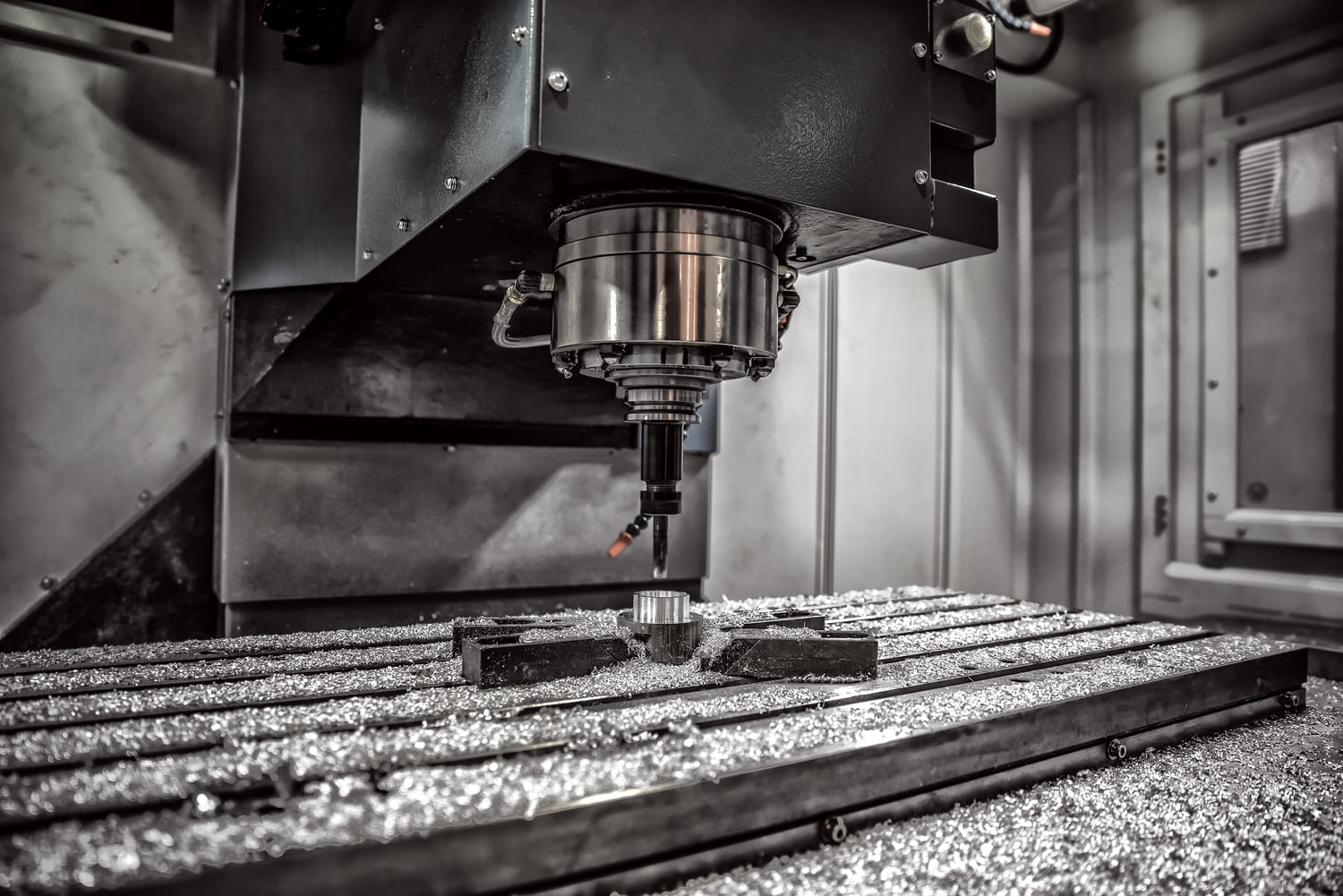
There post-collision management requires a technical-scientific verification protocol. CIIP Cavallari intervenes promptly to assess the extent of the damage and proceed with the restoration of the original geometries on lathes and work centres of all brands (Mazak, Okuma, Mori Seiki, Doosan, Biglia), ensuring that the machine returns to production in complete safety.
In a high-productivity machine shop, a machine tool crash or collision is unfortunately a possible event. A programming error, an incorrect tool offset, or a careless workpiece positioning can cause violent collisions between the spindle, the turret, and the machine structure. Beyond the initial fright, the real problem lies in the invisible damage: even if the machine appears to be working, an impact can irreparably compromise the precision and useful life of the components.
What to do immediately after a collision?
The first instinct after a crash is to reset the alarm and try to move the axles. This is the most common and dangerous mistake. Before putting the machine back into operation, it is essential to follow these steps:
- Immediate stop: Don't force the movements.
- Visual inspection: Check for oil leaks, cracks in castings, or obvious signs of turret movement.
- Check the motor load: If the axle motors show abnormal current draw when idling, the mechanics are misaligned or forced.
A professional technician can prevent damage costing just a few hundred euros from turning into a broken ball screw or motor after just a few hours of hard labor.
The CIIP Cavallari recovery protocol
When we respond to a car crash, our technical staff performs a series of metrological checks to map the consequences of the impact.
1. Checking the Turret Alignment (Lathes)
In lathes, the turret is the most exposed component. An impact almost always moves it "off-axis." We check the centering with respect to the spindle and the squareness. If the turret is rotated, the tools will work off-center, causing breakages and out-of-alignment parts. We proceed with mechanical realignment and resetting the centering pins or Hirth joints.
2. Spindle Geometry Control
The spindle experiences the impact energy through the bearings. We measure the run-out (the eccentricity) of the spindle shaft. A violent impact can cause the bearings to brinell: micro-marks that will generate vibrations and heat over time. We also check that the machine head has not moved relative to the base.
3. Integrity of the Kinematic Chain (Screws and Guides)
The kinetic energy of a collision is transferred to the ball screws. Let's verify:
- Backlash: If the impact has damaged the ball bearings, excessive backlash will appear.
- Screw Supports: Let's check that the thrust bearings have not suffered any deformations.
- Motor Couplings: We check that the joint between the motor and the screw has not slipped or been damaged, compromising positioning accuracy.
Operational safety: restoring protection systems
A collision often damages the telescopic protections or safety glass. Working with a deformed guard exposes the guides to chips, accelerating wear. During post-crash intervention, CIIP Cavallari repairs or replaces the damaged covers and checks the safety microswitches and software limit switches, which are essential to prevent the error from recurring.
Ballbar and Leveling Test: The Ultimate Test
After realigning the mechanical components, we perform the final tests. Ballbar test It allows us to verify the interpolation of the axes: if the circular graph shows deformations, it means there is still a geometric or electronic problem to be solved. Finally, we check the machine's leveling with electronic levels to the nearest thousandth to ensure that the impact has not shifted the base on the anti-vibration mounts.
Prevention is better than cure: the importance of crash sensors
During recovery, we often recommend implementing or properly calibrating the systems load monitoring. Many modern machines have PLC logic that stops movement as soon as it detects an abnormal peak in stress. Correctly calibrating these thresholds can transform a destructive collision into a simple "contact" without serious damage.
Trust the experts to restart with precision
A collision doesn't have to spell the end of your machine tool's precision. With the specialized intervention of CIIP Cavallari, it's possible to identify even the most subtle damage and restore original performance. Don't run the risk of producing non-compliant parts or causing a chain of mechanical failures: in the event of an impact, choose a professional testing protocol that guarantees complete safety and reliability.

