

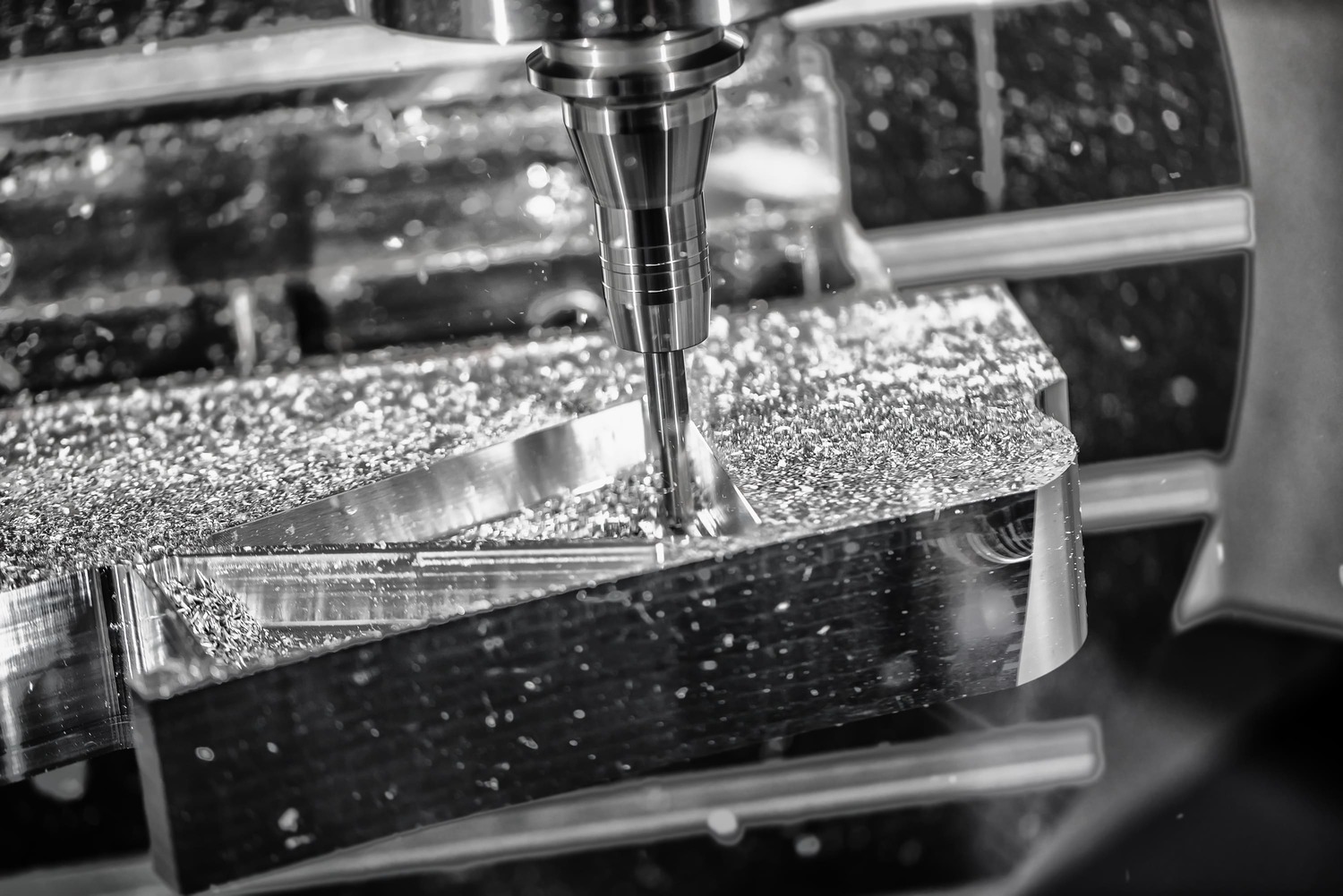
The lathes CNC Ball They are among the most popular machines in mechanical workshops due to their extraordinary material removal capacity and structural rigidity. Those who use a Biglia know they have a workhorse, capable of tackling demanding shifts on difficult materials. However, this very intensive use exposes the machine to stresses that, over time, affect its vital components: the spindle, the tool turret, and the axis kinematics.
When production slows down or the quality of the finish degrades, an intervention is necessary specialized repair. CIIP Cavallari services Biglia lathes in Bologna with targeted diagnostics, focusing on resolving mechanical and electronic problems that could compromise your workshop's profitability.
Diagnosing anomalies: where does a Biglia lathe suffer?
In years of providing technical support for Biglia models (from the B series to the most recent multifunction versions), we've found that problems almost never arise out of nowhere. There are specific set of symptoms that every workshop manager should monitor to avoid extremely costly emergency repairs.
1. The Spindle: Vibrations and Noise
The spindle is the part that transmits power to the workpiece. In Biglia lathes, designed for deep cuts, the spindle bearings are subjected to immense radial and axial loads.
- Symptoms of failure: A high-pitched hiss at high rpm or a dull vibration (running noise) at low rpm indicates deterioration of the bearing races.
- Consequences: If left untreated, overheating can lead to seizure, requiring the entire spindle assembly to be replaced. Prompt repairs, however, allow for simple bearing replacement and clearance adjustment, resulting in significant cost savings.
2. The Tool Turret: Indexing Errors
The turret is one of the most complex components of a Biglia lathe. It must rotate, lock, and ensure perfect positioning in just a few tenths of a second.
- Common problems: Accidental impacts during programming or worn proximity sensors can cause indexing errors. If the turret doesn't lock perfectly on its axis, the tool will run "off-center," causing premature insert breakage and out-of-tolerance workpieces.
- Repair: Our intervention includes disassembly, checking of the Hirth discs, mechanical realignment and recalibration of the unlocking/locking parameters in the CNC.
Axle Mechanics: Smoothness vs. Wear
Biglia lathes move on large linear or prismatic guides. Turning accuracy depends entirely on the machine's ability to move the X and Z axes without hesitation.
Wear of ball screws and bearings
With millions of operating cycles, ball screws can develop a “dead spot” or backlash (backlash). CIIP Cavallari Performs positioning tests to measure this deviation. Often, the problem isn't the screw itself, but the support bearings, which have lost their original preload. A repair focused on replacing the screw supports can restore the Biglia lathe's former precision, avoiding the need to replace the entire screw.
Telescopic guards and lubrication
A common failure in workshop lathes is caused by chips getting under the guards. If the centralized lubrication line is clogged, the guides begin to run dry, increasing friction and strain on the motors (overload alarm). Our service includes overhauling the lubrication circuits and restoring the telescopic guards to protect the mechanical heart of the machine.
CNC Control Electronics and Diagnostics
Although Biglia is synonymous with mechanical robustness, integration with numerical control (often Fanuc) requires specific electronics expertise. During the repair, CIIP Cavallari technicians analyze:
- Drives and Motors: Check operating temperatures and current draw.
- Encoders and Measuring Lines: Cleaning and checking signals to eliminate sudden altitude drifts.
- PLC Software and Logic: Control of range change sequences or management of the counter spindle.
Restoring turning accuracy: the final test
Every repair on a Biglia lathe concludes with a series of practical work tests. We don't just check that the machine "moves," we also verify that it is capable of:
- Maintain cylindricity over long distances (bar turning test).
- Ensure repeatability of the diameter on production batches (thermal stability).
- Absorb vibrations during heavy roughing passes.
This approach guarantees the customer that the repaired lathe is ready to return to the production line immediately without unpleasant surprises.
Why choose CIIP Cavallari for Biglia CNC lathe repairs?
Choose a specialized partner This means drastically reducing diagnosis times. We understand the natural "weak points" of the various Biglia models and intervene surgically.
Our philosophy is that of optimized functional recoveryWe never propose unnecessary replacements, but always seek the technical solution that guarantees the best balance between repair time and the workshop's financial investment. A properly repaired Biglia lathe is a machine that can operate for another ten or twenty years with the same reliability that made it famous.
Having trouble with your Biglia lathe?
If your machine is making unusual noises, struggling to maintain tolerances, or your turret is experiencing frequent alarms, don't wait for it to fail. preventive check and repair targeted are the keys to keeping your shop productive and competitive.

