

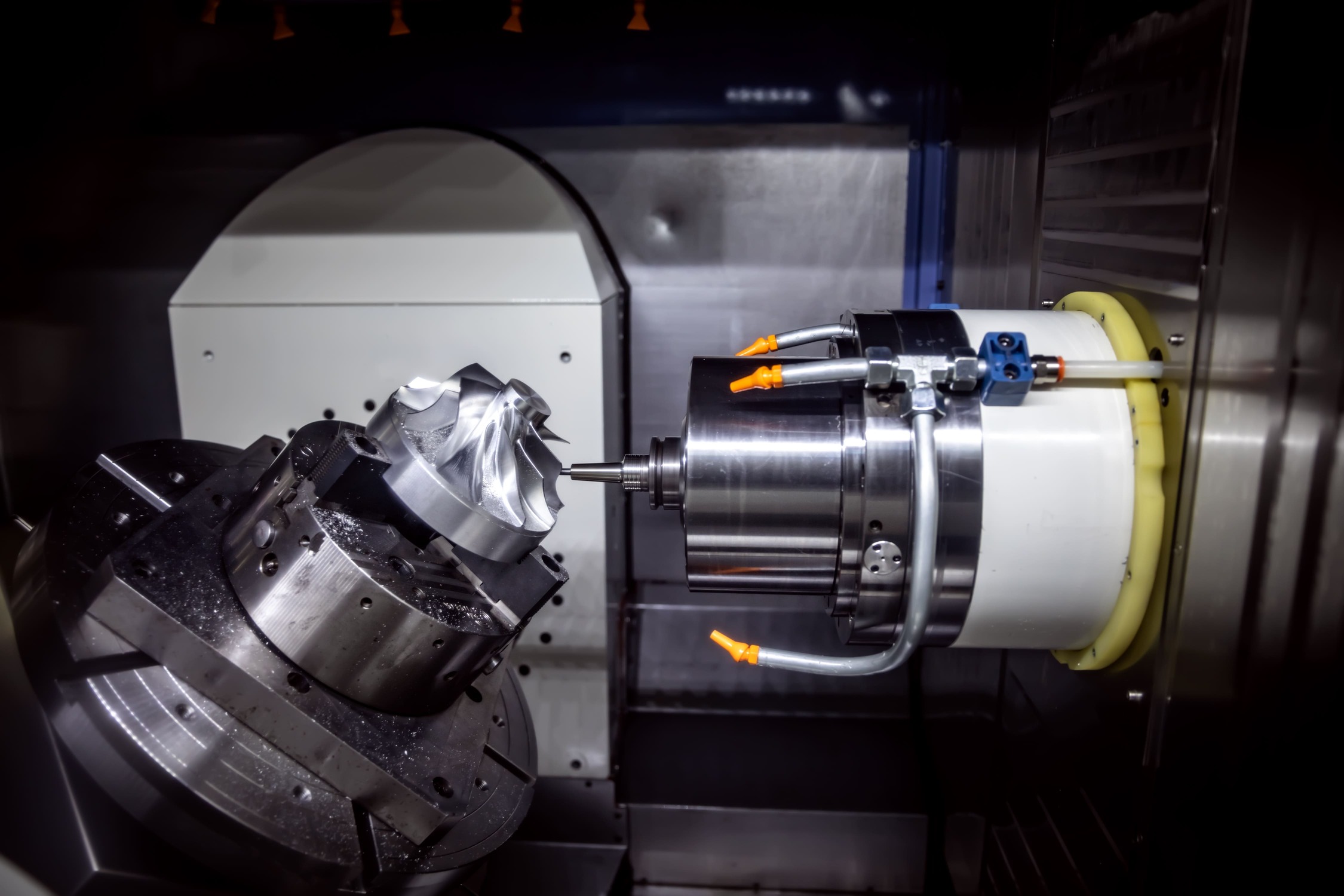
Machine tools Mori Seiki, today integrated into the universe DMG MORI, Mori Seiki lathes and machining centers have always been synonymous with mechanical superiority that defies time. Their structure, characterized by massive benches and cutting-edge motion engineering, is designed to guarantee centesimal precision even under the most severe load conditions. However, in the life cycle of a Mori Seiki lathe or machining center, there comes a time when material wear and structural settling require intervention that goes beyond simple repair: the geometric control and technical revision.
CIIP Cavallari positions itself as a partner of excellence for these delicate operations, offering Mori Seiki assistance services in Venice to restore the machine to "as new" precision, thus protecting the workshop's technological investment.
Why geometric control is vital for a Mori Seiki
In a metalworking market that requires increasingly tighter tolerances, especially in the sectors aerospace, medical and automotive, A Mori Seiki that has lost its original geometry becomes a production bottleneck. It's not just electronic failures, but micro-physical deviations that compromise the repeatability of the part.
Geometric inspection isn't a simple check, but a thorough metrological analysis that investigates the health of the entire structure. An axis that isn't perfectly square or a spindle with a slight misalignment can cause waste that dramatically impacts the company's balance sheet at the end of the month.
Signs that indicate the need for a geometric revision:
- Flatness and parallelism errors: milled surfaces that have “steps” or non-programmable differences in thickness.
- Ovalization in turning: insurmountable difficulties in ensuring the perfect circularity of an external or internal diameter.
- Structural Vibrations (Chatter): abnormal resonances that appear at certain rotation speeds, a symptom of excessive play in the guides or in the spindle.
- Loss of tolerance over long distances: dimensional error increases as the axis moves away from machine zero.
The technical inspection process: the “Second Life” of your car
When a Mori Seiki undergoes an overhaul at CIIP Cavallari, the approach is surgical. The goal is to eliminate any mechanical issues that have accumulated over years of work.
1. Instrumental verification and electronic leveling
Every overhaul starts with the basics: the base. We use ultra-high-resolution electronic levels to verify that the machine has not been twisted due to failure of the floor or anti-vibration mounts. Proper leveling is the prerequisite for any subsequent adjustments.
2. Geometry of axes and orthogonality
Using granite squares and precision calipers, we check the perpendicularity between the X, Y, and Z axes. If the machine is not square, any complex machining operation will be distorted. We mechanically adjust the guides and stops to restore the correct values declared by the manufacturer Mori Seiki.
3. Overhaul of the Spindle and Counter Spindle
The Mori Seiki spindle is the heart of the machining process. The overhaul includes checking the run-out (eccentricity), checking the closing force of the collets or chuck, and, if necessary, restoring the taper. Correct spindle geometry ensures that the motor's energy is transformed into pure removal, without losses in the form of heat or vibration.
Mechanics and Electronics: DMG MORI Integration
Modern Mori Seiki machines integrate sophisticated numerical controls (such as the interface CELOS or previous M730 systems). The geometric review must therefore interface with the electronic part.
During assistance, our technicians provide:
- Compensation for step errors: Software calibration of any residual micro-errors in the ball screws.
- Servomotor calibration: Optimization of acceleration and braking parameters to eliminate mechanical jerks.
- Verification of measurement systems: cleaning and checking the optical scales to ensure that the numerical control always receives correct information on the position of the axes.
The advantages of an overhaul compared to buying a new one
Many companies wonder whether it's better to invest in an overhaul of an existing Mori Seiki or purchase a new one. While technological innovation is important, a geometrically overhauled Mori Seiki can offer performance comparable to a new machine at a fraction of the cost.
- Immediate amortization: The cost of a complete overhaul is recovered in a very short time thanks to the reduction of waste.
- Mechanical reliability: A Mori Seiki chassis from the 2000s or 2010s is often more massive than many current budget machines. Rebuilding it means owning a precision tank.
- Knowledge of the machinery: Operators don't have to learn a new programming language; they continue to work on a machine they know, but with the precision of a brand-new one.
CIIP Cavallari: Specialists in Regenerating Excellence
Servicing Mori Seiki and DMG MORI requires expertise that combines cutting-edge electronics with traditional mechanics. CIIP Cavallari has the equipment and expertise needed to perform thorough diagnoses and targeted overhauls.
Whether it's an NL Series lathe or an NV Series machining center, our goal is the same: ensuring that every piece that comes out of your Mori Seiki is perfect. Overhaul isn't just maintenance; it's an act of respect for one of the best CNC technologies ever created, a way to ensure your company can continue to compete in international markets with the strength of quality.
Contact us for a geometric check-up
Don't let invisible wear and tear damage your profits. If you notice any anomalies in your Mori Seiki workmanship, requires intervention today geometric control. Often, a professional adjustment can save you from having to make drastic repairs in the future.

