

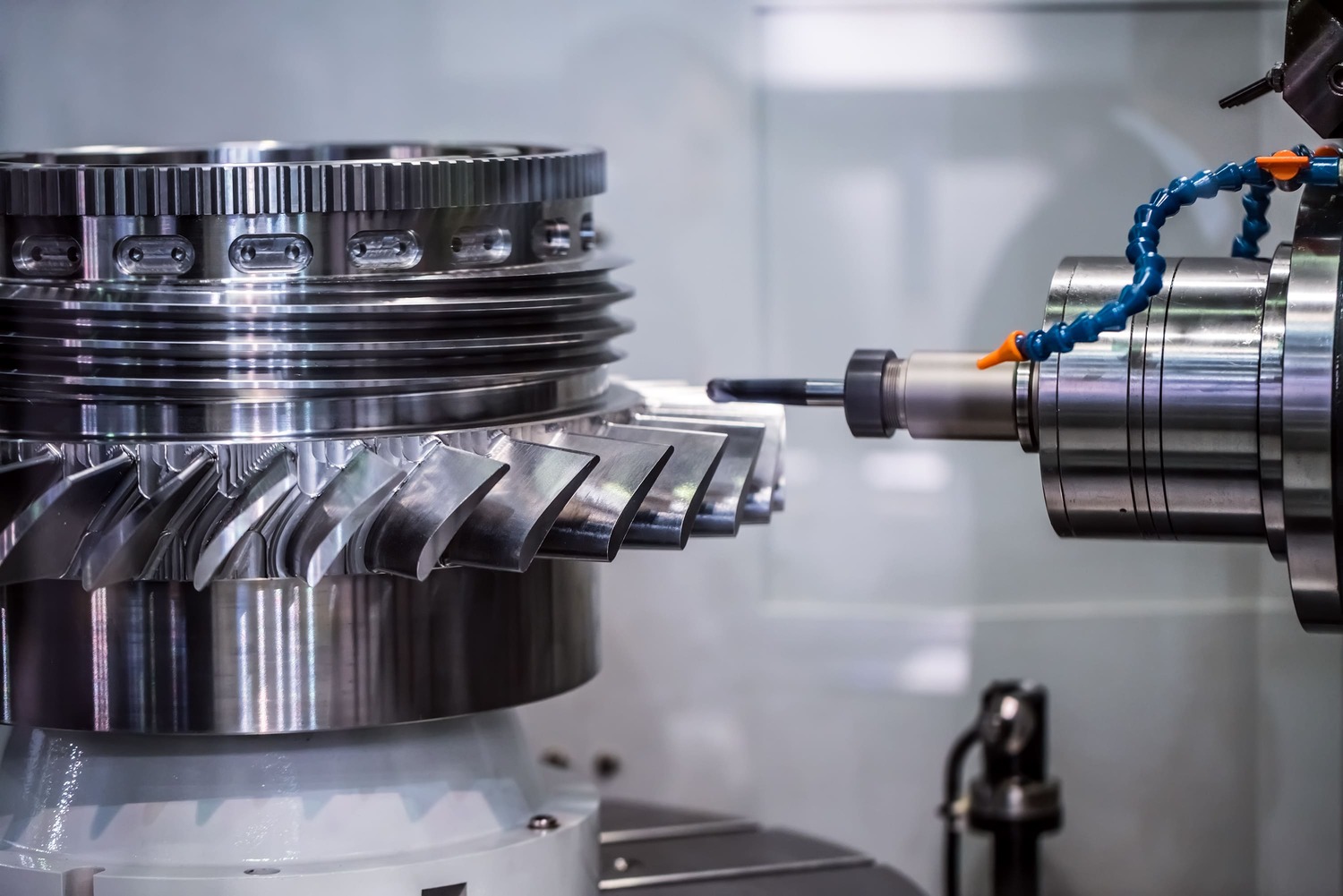
Machine tools Okuma CNC They are considered among the most robust and reliable in the world, thanks to a unique construction philosophy that sees the Japanese manufacturer produce every component in-house: from the numerical control (OSP) to the motors, from the sensors to the spindles. This complete integration allows Okuma machines to maintain high performance for decades. However, the very complexity and high value of these systems require a maintenance strategy that goes beyond the "fix-to-fail" concept.
There Okuma CNC maintenance, If managed proactively, it's the only real tool to ensure productivity doesn't slow down and that a metalworking company's initial investment continues to generate profit over time. CIIP Cavallari supports workshops on this journey, transforming maintenance from a cost to a strategic investment.
The shift from reactive to preventive maintenance
In the mechanical processing sector, the cost of a sudden car stop On an Okuma machining center or lathe, the cost of a scheduled intervention is infinitely higher. An unexpected downtime during a busy production cycle leads to delivery delays, contractual penalties, and often, chain reactions to sensitive components such as the spindle or linear guides due to forced stops during loading.
Scheduling maintenance means manage wear and tear instead of suffering it. Thanks to our technical expertise on Okuma architectures, we can identify signs of degradation long before they turn into a red flag on the OSP control panel.
Why does Okuma require specialized care?
Okuma machines use proprietary technologies that set them apart from the crowd of CNC manufacturers. Let's think about the system Thermo-Friendly Concept, which compensates for the machine's thermal expansion: if the sensors or control logic are not perfectly calibrated, the machine loses its ability to self-regulate, leading to inexplicable production rejects. Professional maintenance ensures that these intelligent systems always function properly at the 100%.
The pillars of Okuma scheduled maintenance
An effective maintenance plan must cover every vital aspect of the machine. Here's how a complete check-up performed by CIIP Cavallari consists of:
1. Spindle System and Temperature Management
The Okuma spindle is a masterpiece of engineering. Maintenance includes checking the lubrication and coolant systems. A clogged filter or degraded oil can cause the bearings to overheat, compromising the surface finish and, in the worst case, leading to seizure. We also check the tool drawbar pull to prevent vibration during heavy machining.
2. Kinematics and Axis Motion Systems
The X, Y, and Z axes must move with pinpoint precision. Proactive maintenance includes:
- Centralized lubrication: Check that each slider and slider is properly greased or oiled. A dry slide will wear out in a matter of weeks, resulting in huge repair costs.
- Belt tensioning and pulley check: Elements that are often overlooked until they break, but which directly influence the dynamics of the machine.
- Checking the telescopic covers: If the guards are damaged, the chip enters the guides, acting as a lethal abrasive for geometric precision.
3. Electronic Diagnostics and OSP Control
The Okuma CNC is extremely sophisticated. Maintenance involves not only cleaning the board cooling fans, but also:
- Checking the backup batteries: It may seem like a minor detail, but losing machine data due to a flat battery can mean days of downtime while the parameters are restored.
- Alarm log analysis: We study the error history to understand if there are recurring anomalies that predict an impending hardware failure.
Predictive Maintenance: listening to the “voice” of the machine
In addition to periodic maintenance (time-based), it is now possible to implement logics of predictive maintenance on Okuma machines. By analyzing vibrations and listening to motor noises during work cycles, our technicians can determine if an axis or spindle bearing is starting to fail.
Intervening at this stage allows you to order spare parts and schedule the intervention at a time of low production, perhaps during a job change, completely eliminating the negative impact on productivity.
The economic benefits: fewer delays, more value
For a business owner or production manager, Okuma maintenance must be read through the numbers:
- Increase in residual value: A well-maintained Okuma machine with technical certification has a significantly higher used market value.
- Reduction of energy consumption: A well-lubricated and aligned mechanical system requires less effort from the motors, reducing electrical consumption under load.
- Quality Optimization: A stable machine allows you to work with more demanding cutting parameters, reducing cycle times without risking tool breakage.
Okuma CNC Spare Parts Management
Working with CIIP Cavallari also means priority access to diagnostics for selecting the necessary components. Knowing in advance what's needed for the next maintenance job eliminates the need for urgent and costly shipments, optimizing the workshop's in-house spare parts inventory.
Protect your production
Owning an Okuma CNC means having a high-tech asset in your workshop. Leaving chance to decide when the machine should stop is a risk no modern metalworking company can afford.
There preventive and proactive maintenance offered by CIIP Cavallari It's the guarantee that your Okuma will continue to produce with the same precision as on day one, protecting your punctuality and profit margins. Don't wait for the machine to stop: call today to schedule a complete technical check-up and ensure the operational continuity your business deserves.

